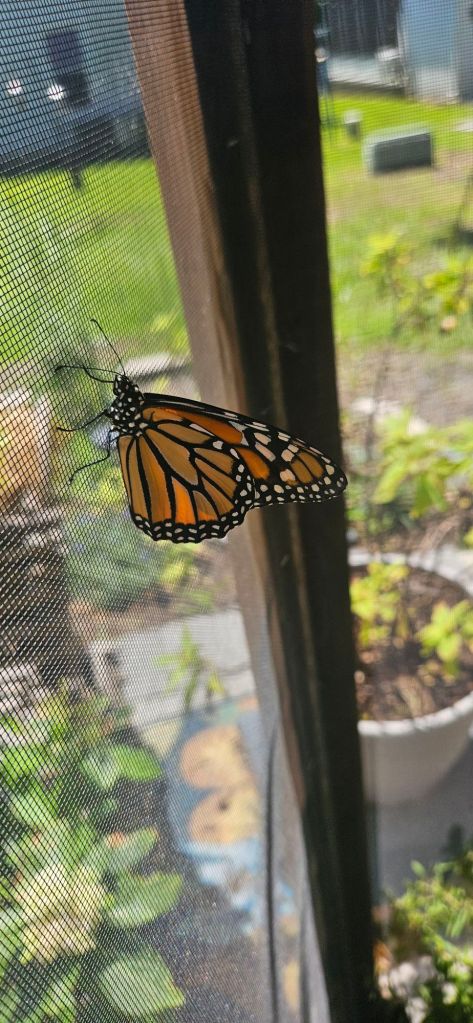
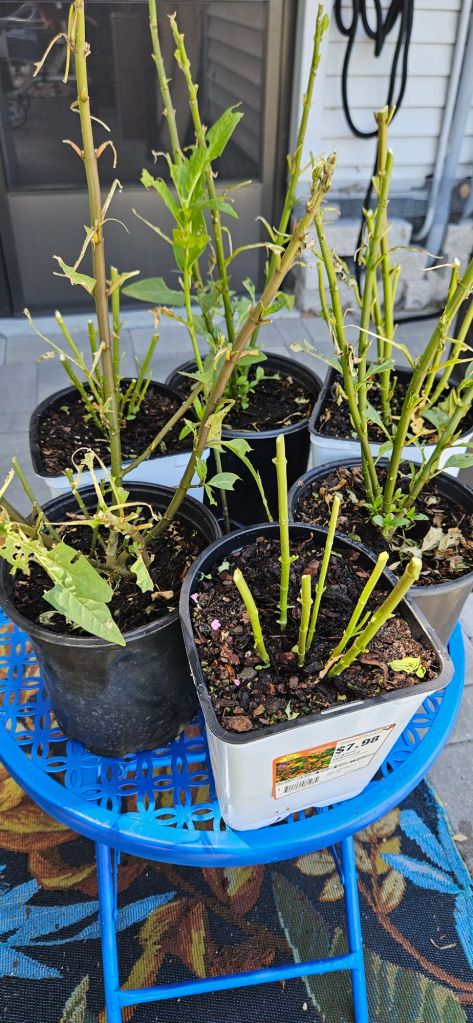
April and May were the peak season for the Monarchs down here in Clearwater, Florida. We invested in dozens of potted plants from the local nurseries, Home Depot, and Lowes. Those plants in the spring are loaded with Monarch Butterfly eggs. We provided assisted living for right around 80 health Monarch butterflies hatched from those eggs and subsequent caterpillars. We thought the season was over. Those butterflies migrated to the north to start the cycle all over.
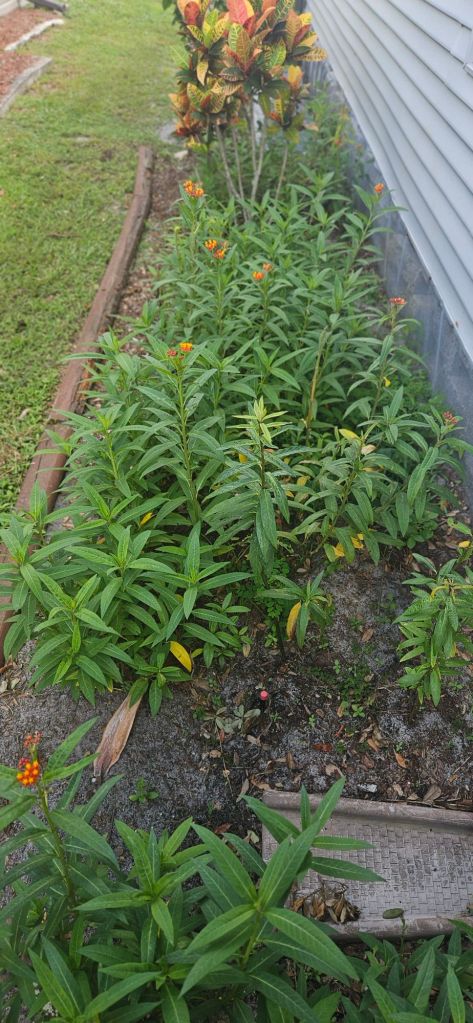
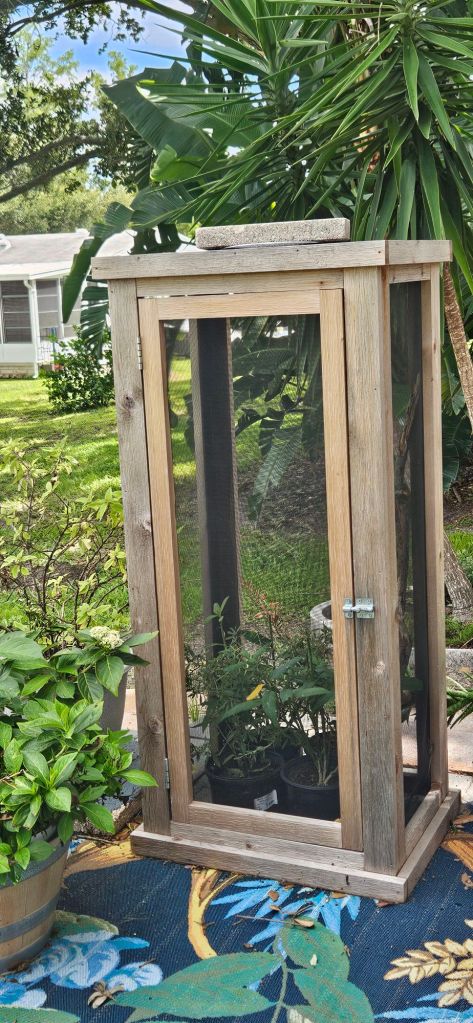
We saw a few of those butterflies hanging around feeding off of our nectar and pollinator plants that we have for them. They have also deposited some eggs on the milkweed plants that have grown back from the bare stalks left from the feasting of that initial last group of caterpillars. As we saw a lone caterpillar, we moved it into the butterfly cage with milkweed plants.
The cage was thoroughly cleaned and sanitized to get rid of any of the OE spores that may have been in it. OE is a spore of the protozoan parasitic that infects the Monarch and Queen butterflies. Infected butterflies carry millions of these tiny lemon-shaped spores on the outside of their bodies. When the adults lay eggs, the spores fall onto the milkweed leaves, where the hungry caterpillars ingest them and become infected. Inside the caterpillar, the spores open and release parasites into its body. Heavily infected butterflies have weak wings, struggle to emerge, and die. Some heavily infected chrysalis have only a gelatinous liquid inside.
We now have a new crop of caterpillars and chrysalises. We don’t have many but enough that we are adding to the population; The newly emerged butterflies are healthy and large. That’s exciting! We thought we were done until fall when the northern crop of butterflies head south. We have provided safe, assisted living for probably a dozen new adults since the heavy spring season. So far, it seems they are mainly female. Hmmm. We need a few males so hopely the next couple of chrysalises are beautiful boys.